On a scorching summer time day in 1991, two brothers named Bryan and Ronald Williams launched a rap label known as Money Cash Data. They hoped Money Cash would sometime pull them out of certainly one of New Orleans’ most wretchedly poor housing tasks.
Neither of them had any expertise operating a report label or working within the music trade. They did not personal a recording studio, and so they did not have any artists on their roster. However what they did have was a dream and the willingness to do no matter it took to achieve success.
The Williams brothers additionally reportedly had round $100,000 in money at their disposal—capital that will have allegedly been supplied by their drug kingpin half-brother, Terrence. Allegedly. However that is irrelevant.
Quick ahead three many years, and at present Money Cash Data stands as probably the most profitable and prolific impartial labels in music historical past. Its two founders, Bryan “Birdman” Williams and his older brother Ronald “Slim” Williams, grew to become two of the richest and strongest figures not simply in hip-hop, however in all of leisure.
How did two guys from the tasks, with nothing however a dream (and a shoebox of money), pull this off? Their story is fairly unbelievable.
Money Cash Data Is Born
When the Williams brothers based Money Cash Data (CMR) in 1991, the underground hip-hop scene in New Orleans was simply beginning to catch hearth. A development known as “bounce music” was exploding throughout Louisiana due to artists like DJ Irv and TT Tucker. The chance for a few formidable entrepreneurs was ripe.
To launch CMR, the Williams brothers first reached out to their father, who owned a preferred native bar and nightclub. Sadly, just a few thousand {dollars} from their dad did not present almost sufficient runway to get off the bottom. The actual cash that launched CMR reportedly got here from their half-brother, Terrence Williams, the founding father of a infamous drug crew known as the Scorching Boys (to not be confused with the Money Cash rap group of the identical title that arrived years later).
Ronald and Bryan selected the title “Money Cash Data” as a reference to the movie “New Jack Metropolis,” through which Wesley Snipes performs a rich New York gangster who runs a crew known as the “Money Cash Brothers.”
With their startup capital secured, the Williams brothers started signing native expertise. Their first roster artist was a 16-year-old child named Kilo-G. Fairly quickly, that they had round a dozen artists, most notably Lil Slim, Mr. Ivan, PxMxWx, and U.N.L.V. In these early days, the Williams brothers organized native reveals and bought their artists’ data proper out of the trunk of their automotive.
Probably the most elementary occasions within the historical past of CMR occurred in 1993 when the label signed a proficient DJ and producer named Mannie Recent. Earlier than Mannie Recent got here alongside, Money Cash’s lyrics and sound had been uncooked and closely influenced by gangster rap. On the opposite finish of the spectrum, Mannie had simply spent greater than a decade mixing and producing pop-influenced home music beats for DJs in New York Metropolis.
The mixture of Mannie’s consumer-friendly beats with Money Cash’s gritty picture shortly got here to be generally known as “Gangsta Bounce.” The sound immediately struck a nerve with hip-hop followers all through Louisiana.
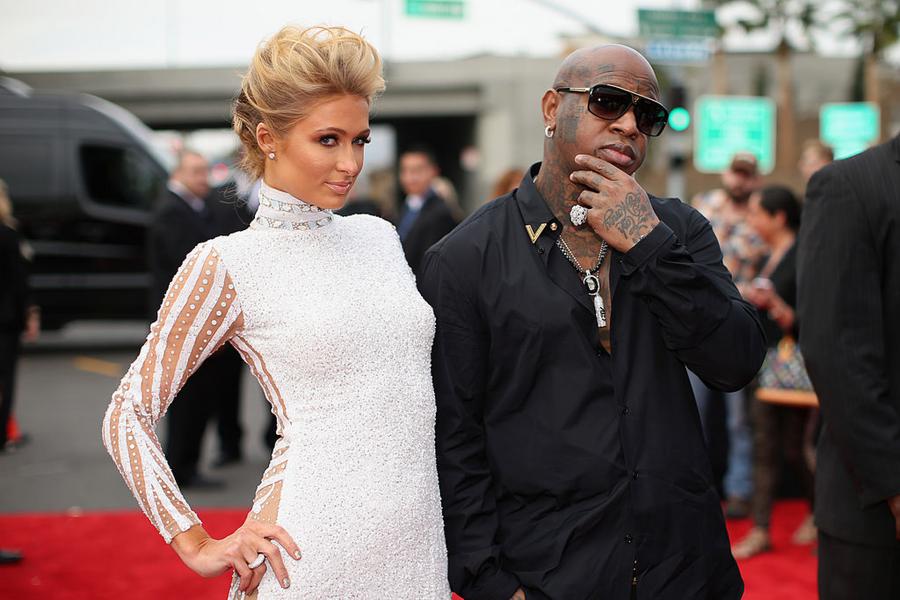
Christopher Polk/Getty Photos
Main Labels Come Calling
Via sheer hustle and expertise, Money Cash signed dozens extra artists between 1994 and 1997. Much more impressively, their albums had been promoting between 25,000 and 50,000 copies with out a distribution or promotional deal from any main label. U.N.L.V.’s second album bought 60,000 copies. The Scorching Boys’ debut album bought an astonishing 300,000 copies in its first few months alone, nearly completely within the better New Orleans space. The Scorching Boys, who had been barely sufficiently old to drive, featured the rappers Juvenile, B.G., Turk, and a 15-year-old prodigy who glided by the title Lil Wayne.
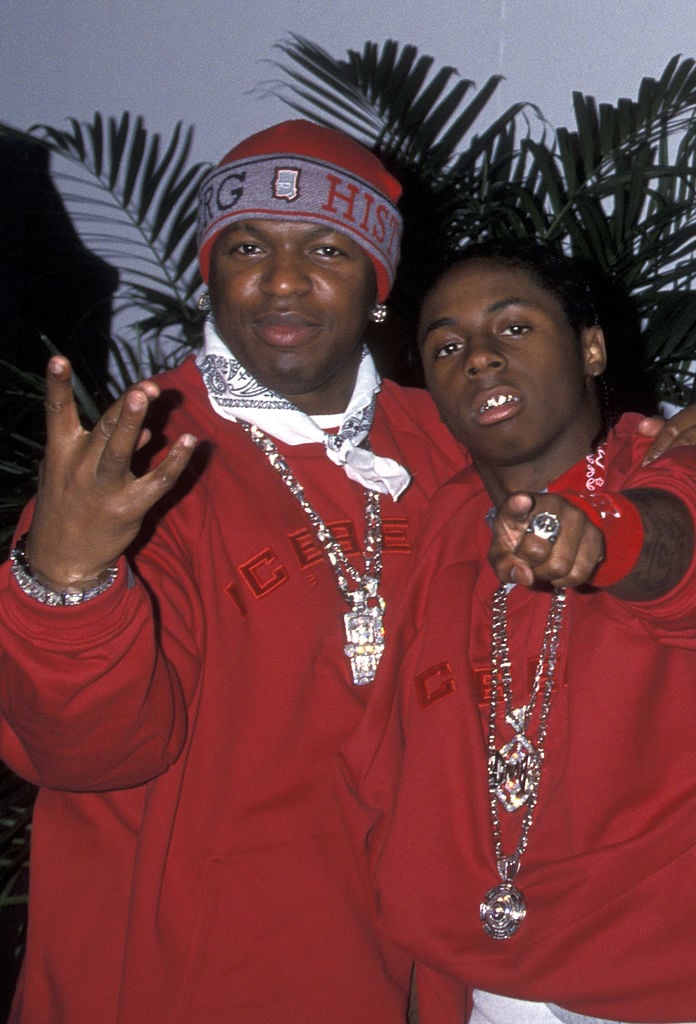
Birdman and Lil Wayne in 2000 (Picture by Ron Galella, Ltd./Ron Galella Assortment by way of Getty Photos)
By the start of 1998, executives from each main report label had been making the trek from New York Metropolis to New Orleans to fulfill the notorious Williams brothers. Though Money Cash had moved tons of of hundreds of models independently, most labels sought to signal them to a regular rookie deal.
That typical deal concerned a small money advance plus a 50/50 break up of earnings (royalties). Crucially, the key report label would keep possession of all present and future grasp recordings and publishing rights.
You possibly can think about the shock every government felt once they heard what the Williams brothers had been demanding. Birdman and Slim needed an 80/20 urgent and distribution deal, plus a multi-million greenback money advance.
This was unprecedented for an unsigned indie label. A “urgent & distribution” (P&D) deal meant that Money Cash would proceed to finance their very own albums and, due to this fact, keep possession of all their masters, royalties, and publishing. Basically, they had been in search of a significant firm to offer manufacturing and logistics in change for a measly 20% reduce of the gross sales.
To say this was unprecedented is an enormous understatement. As Russell Simmons defined on the time, this was the sort of deal an artist like Madonna or Michael Jackson may be fortunate to get after a decade on high of the charts.
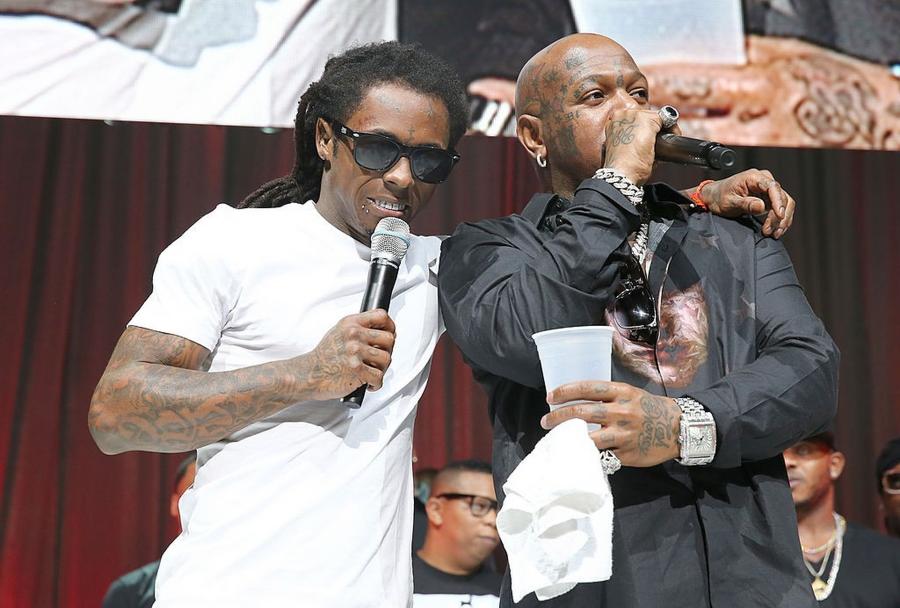
Birdman & Lil Wayne / Neilson Barnard/Getty Photos
Money Cash Cashes In
Amazingly, regardless of their insane calls for, two labels had been nonetheless : Sony and Common. Each corporations knew they would not make a lot cash off the backend, however Money Cash represented one thing much more vital: Market share.
Making a cope with Money Cash would give the successful report firm an immediate foothold within the rising southern hip-hop market. In the long run, Common’s supply was an excessive amount of for Sony to match. Not solely did Common bow to each single demand made by the Williams brothers, however in addition they organized for Money Cash to instantly obtain a $3 million money advance plus $1.5 million for each album they produced every year.
In complete, the deal was value a mind-boggling $30 million—and Money Cash stored their masters.
The magnitude of this deal can’t be overstated. Think about if, after promoting just a few thousand copies of an e-book by yourself, a significant publishing home agreed to pay you thousands and thousands of {dollars} for simply 20% of your earnings, whereas letting you retain the copyright and sequel rights. It merely would not occur.
The strain was on for Birdman and Money Cash to ship. Thankfully, certainly one of their first main releases was an enormous hit. Juvenile’s 1998 solo debut “400 Degreez” bought 4 million copies proper out of the gate, due to the anthem “Again That Azz Up,” placing Money Cash on the map globally. From then on, the crew grew to become a hit-making machine. Between 2001 and 2003 alone, CMR bought over 10 million albums worldwide.
The Billion Greenback Model
Money Cash Data is arguably the one main label on the earth that has stayed related repeatedly for 3 many years. Whereas the roster has shifted over time, the “Huge 3” period—dominated by Lil Wayne, Drake, and Nicki Minaj—generated income that the majority labels solely dream of.
Birdman famously said that Money Cash’s final purpose was to turn out to be the primary billion-dollar music model. Between the catalog of the late 90s and the worldwide domination of Drake and Wayne within the 2010s, they undoubtedly generated over a billion {dollars} in gross income. In complete, artists from Money Cash Data have bought tons of of thousands and thousands of albums worldwide.
Birdman’s Wealth & Actual Property Empire
Because of the outstanding success of Money Cash Data, Birdman sits on an estimated $150 million internet value at present. A big portion of his internet value is predicated on the worth of his artists’ catalogs.
At his peak, Birdman owned a $30 million condominium in Miami, a big mansion in New Orleans, and a minimum of two different properties in Miami (certainly one of which served as a recording studio). Throughout Hurricane Katrina, Birdman misplaced 20 homes and 50 automobiles, together with two Maybachs and 4 Ferraris. For a few years, his major residence was an enormous 20,000-square-foot waterfront mansion on Miami’s unique Palm Island.
The Palm Island mansion has an fascinating historical past. Hip-hop producer Scott Storch paid $10.5 million for it in 2006, solely to lose it to foreclosures just a few years later after blowing by a peak $70-100 million fortune. Entrepreneur Russell Weiner, who earned his multi-billion greenback fortune because the founding father of Rockstar Power Drink, purchased the home out of foreclosures in 2010 for $6.7 million. Simply two years later, Russ flipped the home to Birdman for $14.5 million.
For some cause, Birdman had his personal temporary monetary issues related to this property. In January 2018, a financial institution threatened to evict Birdman from the mansion. Birdman instantly tried to promote the home for a sky-high $20 million however had no takers. He dropped the worth to $16.9 million, then $15 million, finally accepting $10.9 million in July 2020.
The final word lesson from the Williams brothers is easy: Leverage is the whole lot. In an trade designed to chew up artists and spit them out, they proved that you probably have the imaginative and prescient to wager on your self—and the center to demand what you are really value—you do not simply get a seat on the desk. You get to personal the entire constructing.
