
Right this moment, we take it with no consideration that “Batman” is a large, dependable field workplace franchise. Because the early Nineties, there’s been a Batman film each few years, they usually’re assured to print cash. Collectively, the movies have generated greater than $5 billion on the world field workplace. However that wasn’t all the time the case. Actually, main as much as 1989’s “Batman,” the franchise was mainly useless. The newest model of the character that audiences remembered was the campy Nineteen Sixties Adam West TV present, full with its “POW!” and “BAM!” struggle sequences.
You would possibly assume Warner Bros. would flip to a confirmed blockbuster director like Steven Spielberg and an motion megastar reminiscent of Sylvester Stallone to helm their Batman venture.
Nope. Proper out of the gate, Warner Bros. made some very uncommon inventive decisions. The studio handed the venture to Tim Burton, a comparatively inexperienced director whose solely main credit have been the oddball comedies “Pee-wee’s Large Journey” and “Beetlejuice.” For the title position, Burton forged Michael Keaton — a comedic actor with a wiry construct and a résumé that included “Mr. Mother.” Followers of the comedian guide character, who imagined Batman as a menacing, muscle-bound determine, have been baffled. Business insiders questioned whether or not the film might work in any respect.
Enter Jack Nicholson. Already one of many largest stars in Hollywood, Nicholson had the awards, the clout, and the field workplace observe report Warner Bros. wanted to present the venture credibility and a few heavyweight star energy.
Jack knew that, and he used that leverage to barter one of the vital well-known contracts in Hollywood historical past…
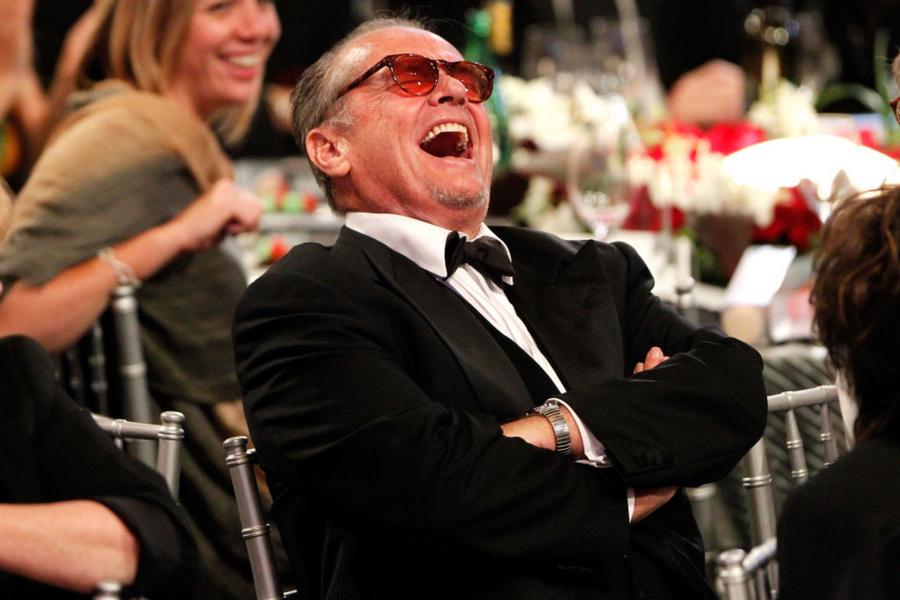
Christopher Polk/Getty Photographs
Setting the Stage: Nicholson within the Eighties
By the point “Batman” went into manufacturing, Jack Nicholson was on the peak of his powers. He had already received two Academy Awards — Finest Actor for “One Flew Over the Cuckoo’s Nest” (1975) and Finest Supporting Actor for “Phrases of Endearment” (1983) — and was broadly thought to be one of the vital gifted actors of his era. Extra importantly, he was additionally one of the vital bankable.
Nicholson’s wage had climbed steadily over time. He earned $500,000 for “Chinatown” in 1974, $1.25 million for Stanley Kubrick’s “The Shining” in 1980, and by the mid-Eighties was commanding $4 to $5 million per movie. He additionally had a historical past of structuring progressive contracts. His groundbreaking deal for “One Flew Over the Cuckoo’s Nest” gave him a $1 million base wage plus 15% of the gross. That gamble netted him about $15 million within the late Nineteen Seventies — equal to $60 million as we speak. It was proof that Nicholson wasn’t afraid to commerce short-term money for long-term upside.
So when Warner Bros. got here calling with “Batman,” Nicholson wasn’t simply one other actor being supplied a job. He was a confirmed negotiator with the résumé and star energy to demand a deal in contrast to something Hollywood had seen earlier than.
The Joker Deal
Warner Bros. initially supplied Nicholson an easy $10 million wage to play the Joker. It was a hefty sum for the time, and effectively inside Nicholson’s market worth. However Nicholson noticed a chance to do one thing greater. Moderately than take the flat charge, he restructured the deal in a manner that gave him a bit of the motion.
Nicholson agreed to decrease his base wage to $6 million in change for backend participation within the movie’s income and, most unusually, a share of Joker-branded merchandise. These “factors on the gross” meant Nicholson would acquire a proportion of almost each greenback the movie earned on the field workplace and thru licensing. It was a danger, as a result of on the time, superhero motion pictures have been removed from assured hits. However Nicholson understood the cultural potential of Batman, and he knew Warner Bros. was determined sufficient to present him phrases few different actors might dream of.
The contract was groundbreaking in each scope and construction. By tying his compensation to field workplace efficiency and merchandising, Nicholson wasn’t simply betting on himself — he was betting on Batman turning into a phenomenon. Because it turned out, that gamble would repay spectacularly.
The Payday
When “Batman” hit theaters in the summertime of 1989, it was greater than only a film launch — it was a cultural occasion. Tim Burton’s darker imaginative and prescient of Gotham shocked critics, Michael Keaton silenced doubters together with his brooding tackle Bruce Wayne, and Nicholson’s Joker stole the present. His menacing, eccentric efficiency grew to become the defining model of the character for a era of moviegoers.
Audiences flocked to theaters. The movie earned $411 million worldwide, making it one of many highest-grossing motion pictures of the last decade. Simply as necessary, “Batman” sparked a merchandising juggernaut. Toys, T-shirts, lunchboxes, posters, and Joker-branded collectibles flooded the market, bringing in tons of of hundreds of thousands of {dollars} in licensing income. For Warner Bros., the film proved that comedian guide variations could possibly be billion-dollar companies. For Nicholson, it proved that his contract was a masterstroke.
Inside just some years of the discharge, Nicholson’s backend deal had already netted him greater than $40 million. By the mid-Nineties, his complete payday had climbed to an estimated $60 million — equal to round $130 million as we speak. That single position immediately grew to become one of the vital worthwhile appearing offers in Hollywood historical past.
The Aftermath: A Hollywood Benchmark
Jack Nicholson’s Joker payday rapidly grew to become legend in Hollywood. On the time, no actor had ever earned a lot cash from a single film. His $60 million haul set a brand new commonplace for backend participation offers and confirmed that stars might command not simply salaries, however a real share of a film’s general success. Studios grumbled, however actors paid consideration.
Within the years that adopted, Nicholson’s “Batman” contract grew to become a blueprint for the largest stars within the trade. Tom Cruise, Tom Hanks, and Jim Carrey all negotiated backend participation offers that gave them a lower of field workplace income. Robert Downey Jr. would later comply with an analogous mannequin with Marvel, in the end incomes tens of hundreds of thousands from his run as Iron Man. However the template — reducing upfront wage in change for factors on the gross — had already been cemented by Nicholson’s Joker.
Who Topped Nicholson’s Payday?
For years, Jack Nicholson’s “Batman” deal stood as essentially the most profitable contract in Hollywood historical past. However finally, a handful of different stars managed to safe even bigger single-movie paydays — thanks in no small half to the precedent Nicholson set.
In 1999, Bruce Willis shocked Hollywood when his gamble on “The Sixth Sense” paid off. Willis obtained a $14 million base wage plus a outstanding 17.5% of the movie’s income and ancillary income. The supernatural thriller grew to become a world smash, incomes $670 million on the field workplace. Willis’s ultimate payday totaled an estimated $114 million, which equals about $194 million as we speak when adjusted for inflation. It stays the largest single-movie acting paycheck in history.
Arnold Schwarzenegger got here shut in 2003 together with his contract for “Terminator 3: Rise of the Machines.” His deal assured a $29.25 million base wage, a $1.5 million perk package deal for personal jets and safety, $1.6 million per day in overage charges if the shoot ran lengthy, and most significantly, 20% of the movie’s gross revenues. When all was mentioned and performed, Schwarzenegger pocketed around $110 million from the venture, or roughly $180 million in as we speak’s {dollars}.
Though Bruce Willis and Arnold Schwarzenegger in the end scored bigger single-film windfalls, Nicholson’s Joker deal stays the one which modified Hollywood ceaselessly. It was the second stars realized they did not simply must act in blockbusters — they might personal a bit of them.


